
Kalkan information: weather and Climate
Kalkan's climate
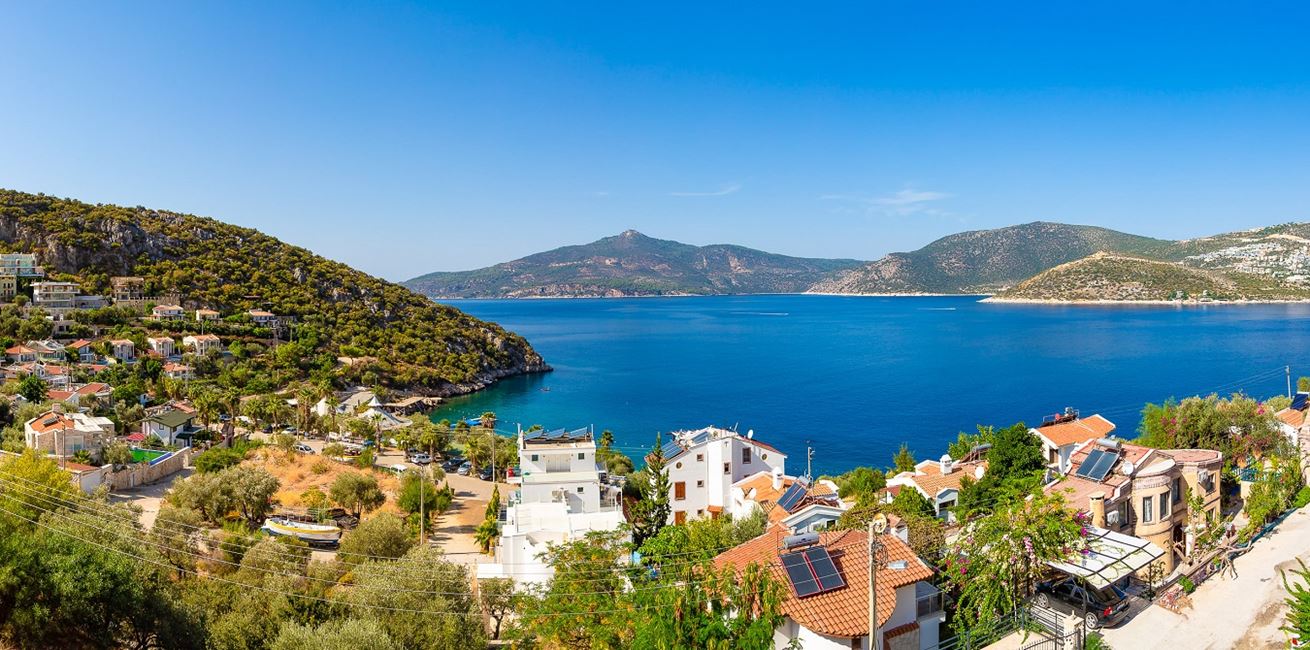
Kalkan sits on Turkey's southern Mediterranean coast at approximately 36.2581° N, 29.4083° E. The Taurus Mountains rise steeply behind the town and help shape the local weather, creating long, dry summers and comparatively mild winters.
In simple terms, Kalkan's climate follows a southern Mediterranean pattern: bright, dry days through late spring and summer, with most rainfall arriving in winter and early spring.
Co-ordinates
36.2581° N
29.4083° E
Climate information is shared as a guide. Weather varies year to year, and conditions can change quickly in the mountains and along the coast.
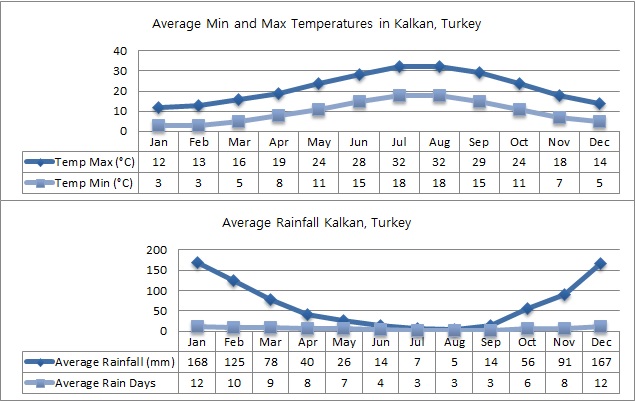
Average temperatures and rainfall
Winds and seasonal feel
In summer, you may notice the Meltemi winds: typically northerly to north-westerly, building through the day and easing in the evening. They often arrive with clear skies and can take the edge off peak heat.
At times, hot and dusty air can blow across from Africa (often described locally as Khamsin conditions). When it arrives, the feel is drier, warmer and more intense, with reduced humidity but higher temperatures.
Month-by-month guide for the season
April
A comfortable start to the season, with daytime temperatures often above 20°C and cooler evenings. It's an easy month for exploring, before peak summer heat settles in.
Typical feel: mild, bright days; occasional spring showers.
May
Warm, reliably sunny and ideal for villa living: long lunches outdoors, early swims, and evenings that still feel fresh enough for a light layer.
Typical feel: dry, sunny, comfortably warm.
June
Clear skies become the norm, with hot afternoons and very little rainfall. Pools and the sea are firmly in daily use, and the town feels fully open for the season.
Typical feel: hot, dry, bright; occasional light drizzle.
July
Peak summer heat: long, hot days and warm nights. The air is usually dry rather than sticky, and a sea breeze can help, particularly on terraces above the harbour.
Typical feel: very hot, very dry, high summer.
August
The hottest and driest month, often with very little rain. Beach clubs and bays become the daytime rhythm, with evenings best enjoyed slowly as the heat eases.
Typical feel: intense heat; rain is uncommon.
September
Summer continues, but with a softer edge. Sea temperatures remain inviting, and the pace can feel calmer as family travel eases after the school holidays.
Typical feel: hot days, warm evenings, settled weather.
October
A favourite month for many: warm, sunlit days with cooler evenings. There can be more changeable weather later in the month, but it often still feels distinctly like summer.
Typical feel: warm and pleasant; occasional autumn showers.
Climate figures and rainfall notes are long-term averages and intended as a general guide. If you're travelling with specific needs (very young children, heat sensitivity, or activity-led plans), it's worth checking a short-range forecast close to departure.